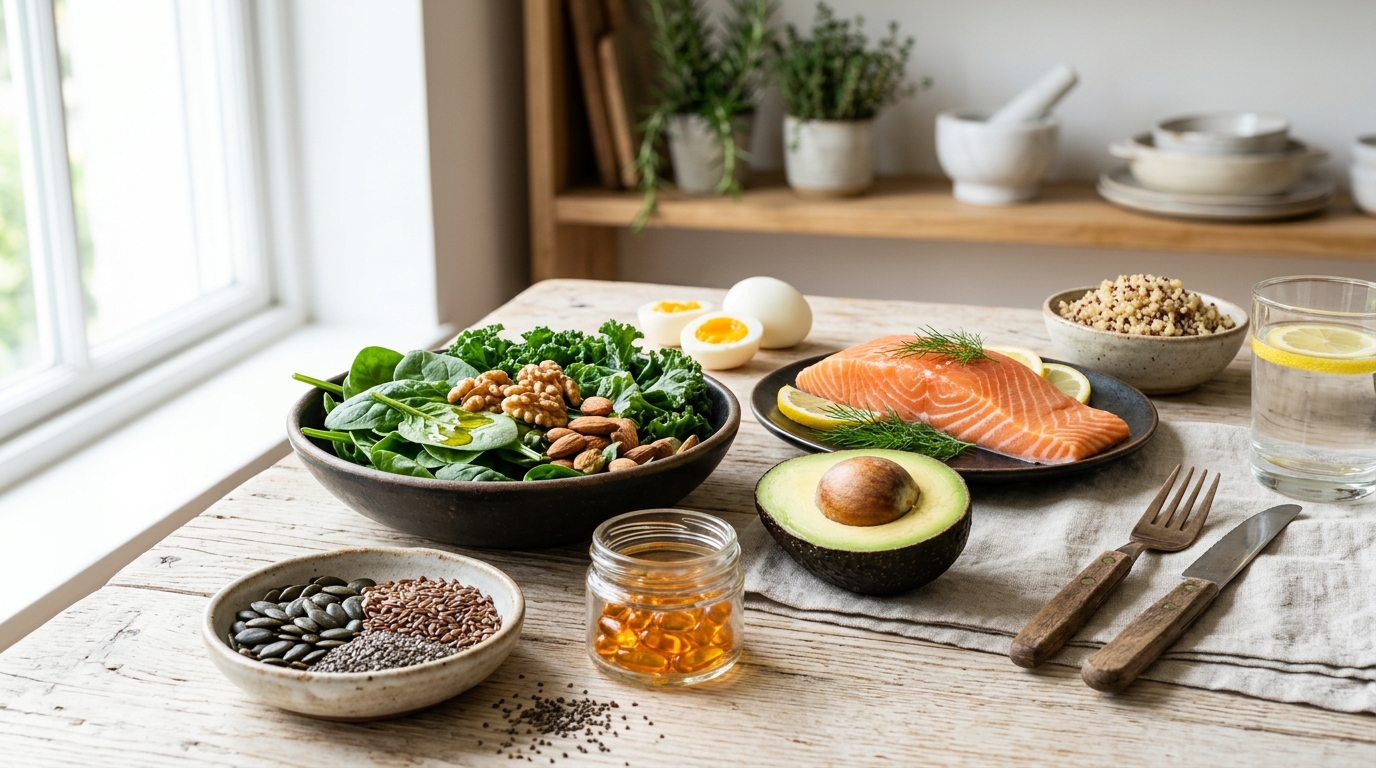
Protein: The Building Block
Hair is primarily composed of keratin, a protein. Adequate protein intake is essential for hair growth and strength. Aim for 0.8-1.0 grams per pound of body weight daily.
Protein sources: lean meats, fish, eggs, legumes, dairy, nuts, and seeds.
Micronutrients for Hair
Iron transports oxygen to hair follicles. Deficiency causes telogen effluvium (hair shedding).
Zinc regulates sebum production and supports immune function. Deficiency leads to hair loss.
Vitamin B7 (Biotin) may strengthen hair and nails. While deficiency is rare, supplementation shows modest benefits.
Vitamin A regulates sebum production. Too little causes dry, brittle hair; too much can actually trigger hair loss.
Vitamin C produces collagen, essential for hair structure.
Vitamin D influences hair follicle cycling. Deficiency is associated with alopecia.
Omega-3 Fatty Acids
These essential fats reduce inflammation and support blood flow to hair follicles. Fatty fish, walnuts, flax seeds, and chia seeds are excellent sources.
The Anti-Inflammatory Diet
Chronic inflammation disrupts hair growth cycles. Focus on whole foods, reduce processed products, and include anti-inflammatory foods like berries, leafy greens, and herbs.
Hydration
Water is crucial for nutrient transport and hair cell function. Drink adequate water daily—most recommendations suggest about half your body weight in ounces.
Timeline for Results
Hair growth takes time. Since hair grows approximately 0.5 inches monthly, visible improvement from dietary changes typically takes 3-6 months. Be consistent and patient.