Asian Diet Principles: Balance, Variety, and Longevity
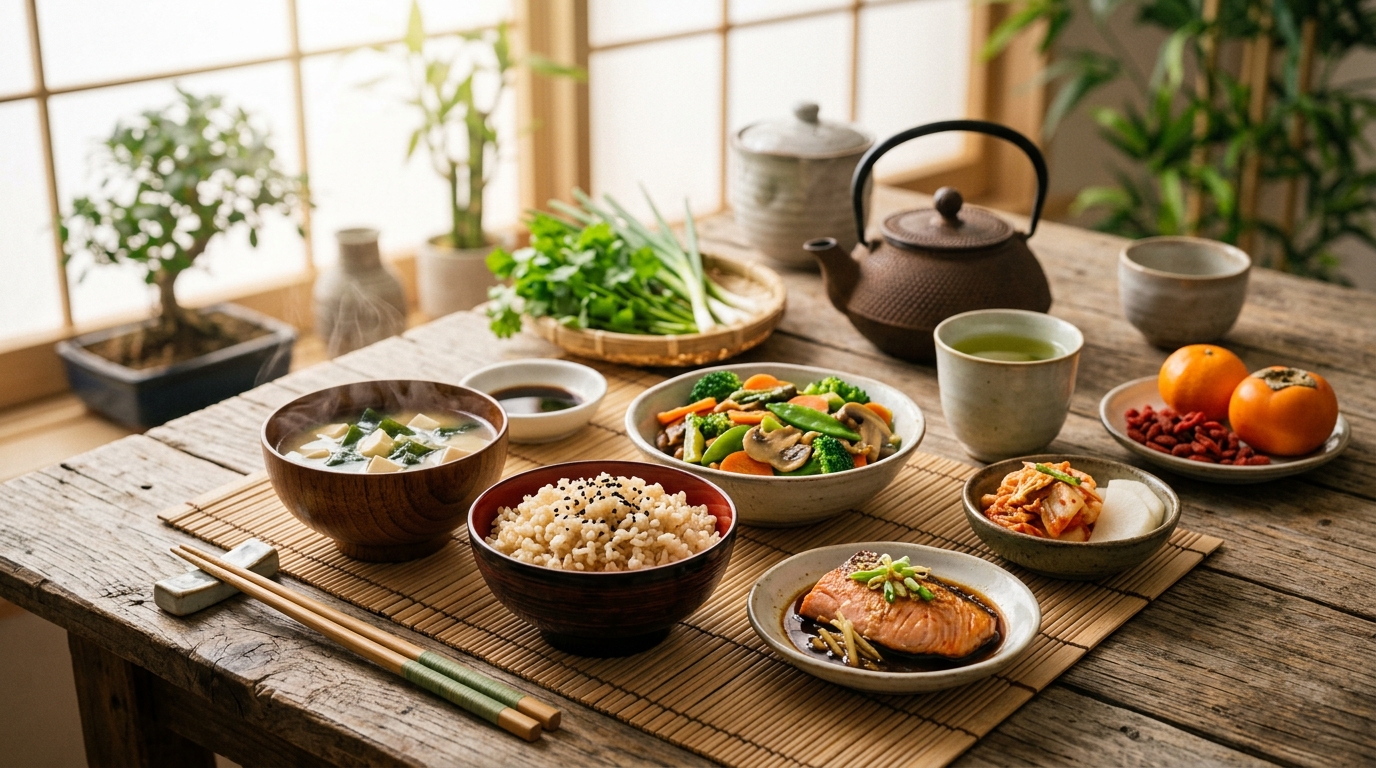
Traditional Asian dietary patterns consistently rank among the healthiest globally. The Japanese, Okinawan, and traditional Chinese diets share principles that Western nutritional science is only now validating.
Core Principles
Hara hachi bu (eat until 80% full) naturally creates a caloric deficit without conscious restriction. Emphasis on variety ensures micronutrient completeness. Small portions of many different foods replace large portions of few foods.
Key Components
Fermented foods (miso, kimchi, natto) provide probiotics and enhanced bioavailability of nutrients. Seafood provides omega-3s and iodine. Green tea delivers catechins for metabolic support. Cruciferous vegetables (bok choy, Chinese cabbage) offer sulforaphane.
The Rice Question
White rice, often demonized in Western diet culture, serves as a clean energy source when combined with the fiber, protein, and fats of accompanying dishes. In the context of a whole-food Asian diet, it does not produce the metabolic disruption seen with isolated refined carbohydrates.
Cooking Methods
Steaming preserves heat-sensitive nutrients. Stir-frying in small amounts of oil maintains vegetable structure and adds minimal fat. Fermentation pre-digests foods and creates new beneficial compounds. Raw preparations (sashimi, fresh vegetables) maximize enzyme availability.
Longevity Evidence
Okinawa holds the world record for centenarians per capita. The traditional Okinawan diet provides 1,800 calories daily with extraordinary micronutrient density. Key longevity factors include sweet potato as primary carbohydrate, abundant seaweed, turmeric use, and social eating practices.
Adapting for Western Kitchens
Incorporate the principles rather than replicating exact dishes. Eat more fish, add fermented foods daily, increase vegetable variety, practice mindful eating speeds, and reduce portion sizes while increasing meal components.